B L N F S H D T C M G P R A O U E I Q
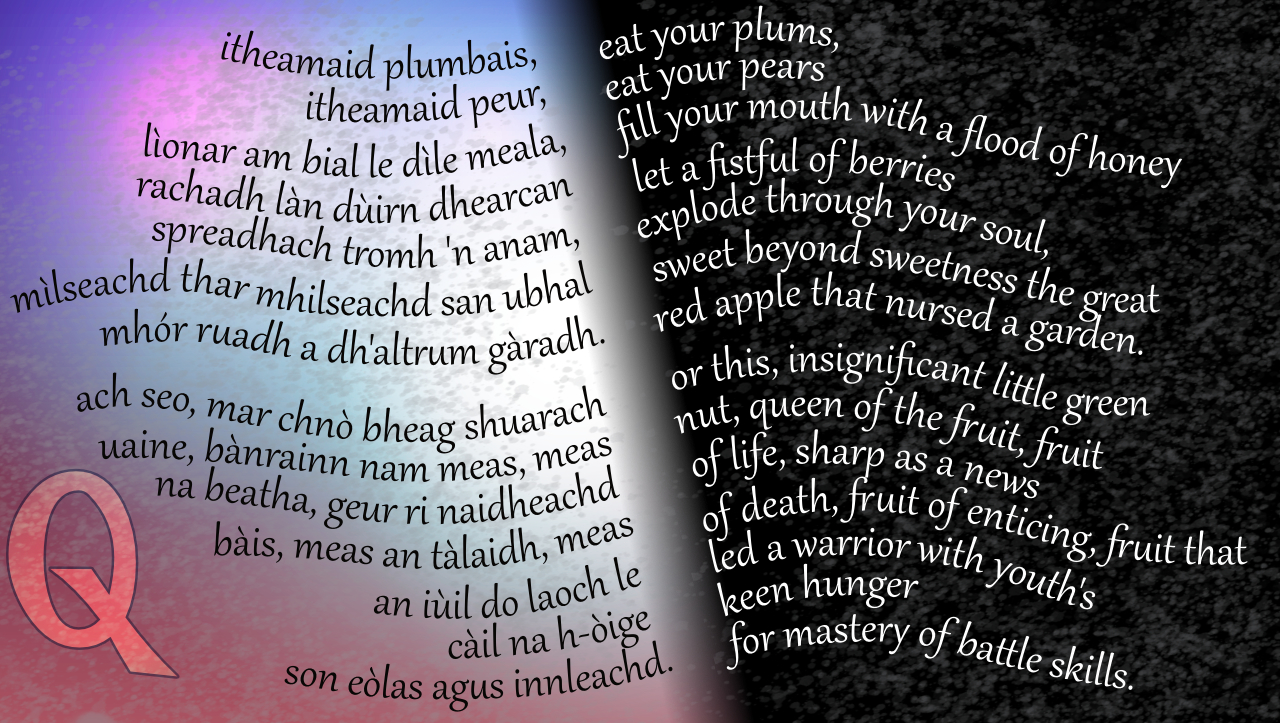
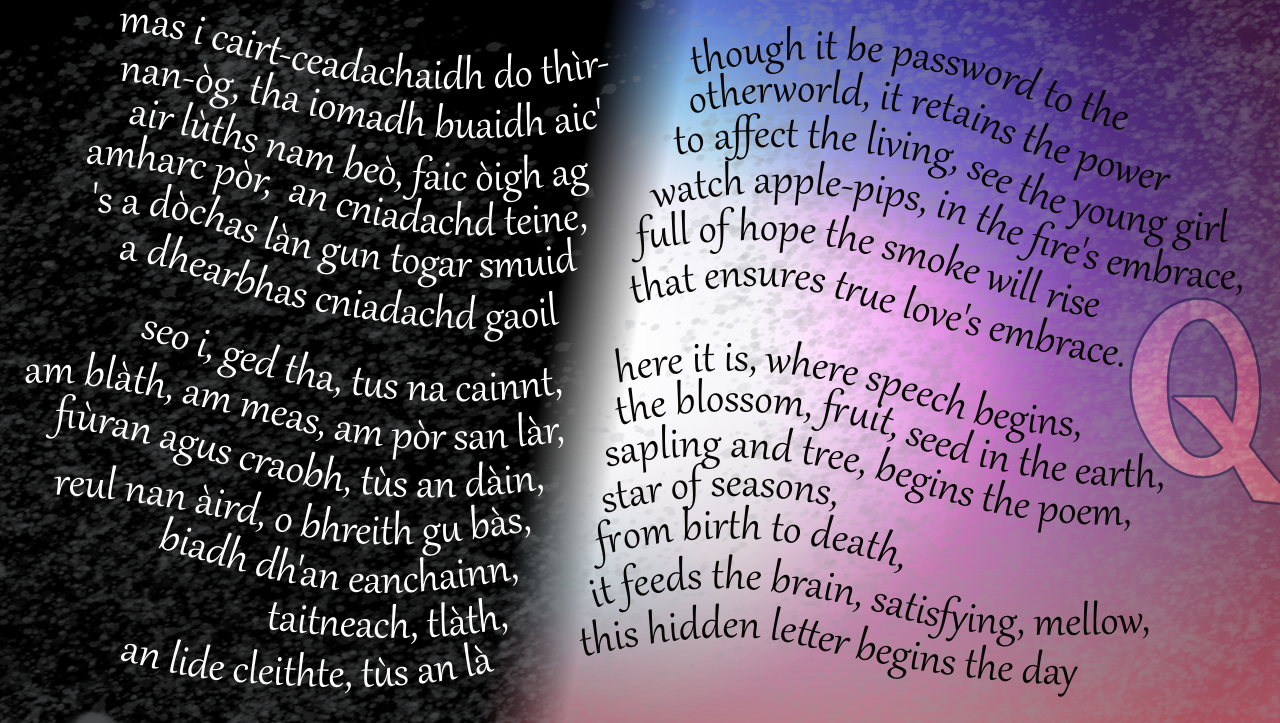
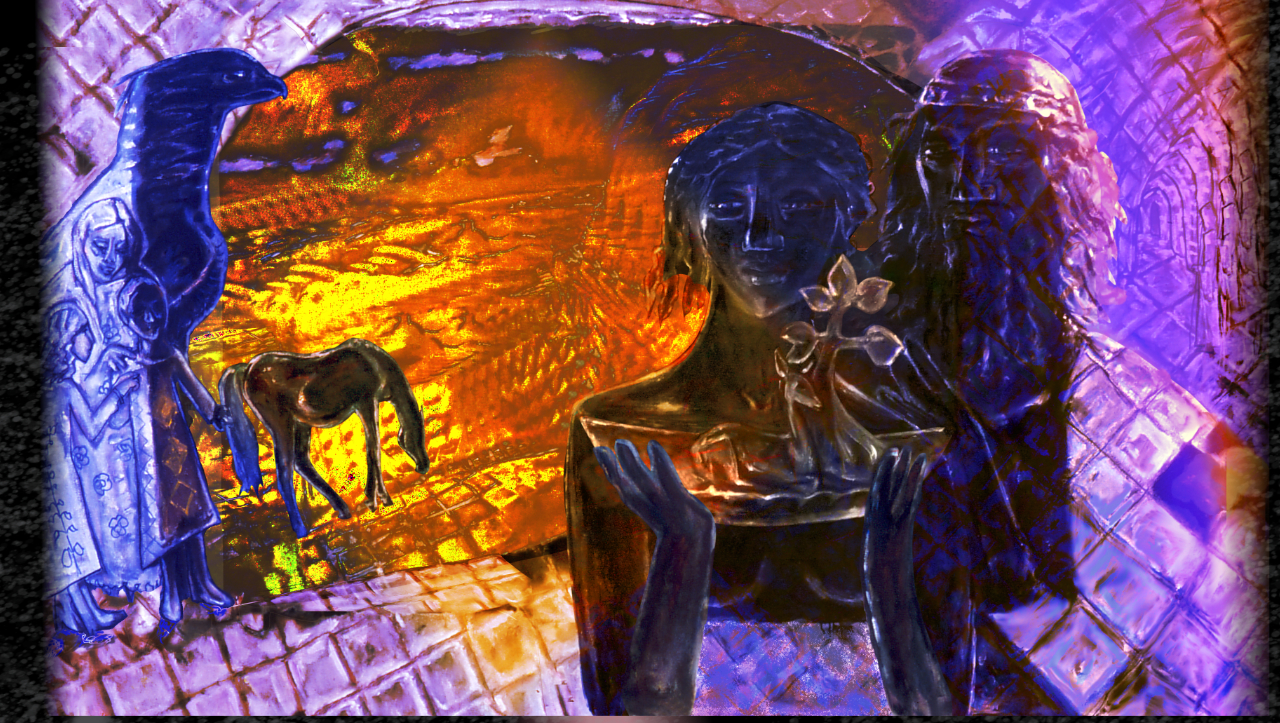
With more than 8,000 varieties, apples are the most widely grown of any tree fruit, yet all come from one source. Belonging to the rose family, along with pears and plums, apple trees take 4 to 5 years to produce their first fruit.
Blossoms are produced in Spring along with the budding of the leaves. White flowers with five petals and a pink tinge, they surround an inflorescence consisting of a cyme with 4–6 flowers. This central flower is called the "king bloom" and opens first. As the outer petals gradually fade, the cyme starts to develop a larger fruit.
The original genetic wild ancestor of all modern apples is still found in the mountains of Central Asia, maintaining a deep connection with the old Silk Road - the heart of the ancient trade routes that ran through the Tien Shan Mountains of Kazakhstan.

Apples are used almost entirely for eating directly from the tree. Any timber from the tree tends to be used for fine carving and speciality wood objects rather than everyday items since the wood is not widely available in large sizes and can be difficult to work with, due to a high density.


Cider is of course a mainstay of apple production in South West England

And closely related to cider is crab apple jelly and cider vinegar

The apple has several different roles in mythology. In Norse tales, the apple is usually regarded as the fruit of eternal youth and fertility, and the goddess Iðunn provided apples to the gods to give them eternal youthfulness in the Prose Edda . Buckets of apples were found in the Oseberg ship burial site in Norway, and in the early graves of the Germanic peoples in England and elsewhere on the continent of Europe.
In Greek myths the apple is generally seen as a forbidden fruit and played a central role as the Apple of Discord that began with the goddess Eris arriving at a marriage as an unwelcome guest and making a challenge that Zeus gave to Paris (as he was mortal unlike the others) to decide. The apple was marked "for the fairest" and his choice was between Hera, Athene and Aphrodite as to who was most beautiful. Answering last, Aphrodite told him 'Paris, a man as handsome as you won't waste his life on these mountains. You will marry Helen of Sparta, who is almost as beautiful as I am.' Unfortunately, since King Menelaus of Troy was already married to Helen, when Paris kidnapped her, the ensuing fight led into the Trojan War.

And of course there is Heracles, who has to pick the golden apples from the garden of the Hesperides as one of his Twelve Labours. A serpent protects the tree, tended by his constant guardians..


Which serpent symbolism perhaps led in turn to the Christian tradition of the apple that equates to the strange triad of temptation, knowledge and sin as seen through the story of Adam and Eve and the serpent. In all these variations, there remains a strangely apt feature to the apple. It has a pattern of fives built into it, both in petals and in cross section of the fruit.
In a particular sense, the apple has a 'hidden' element to it, being neither vowel nor consonant and only appearing in the context of the Golden Year at the completion of the Lunar Cycle of nineteen years. We are back to the 13:5:19 pattern of numbers